
More about Suprematist Composition: White on White
- All
- Info
- Shop

Contributor
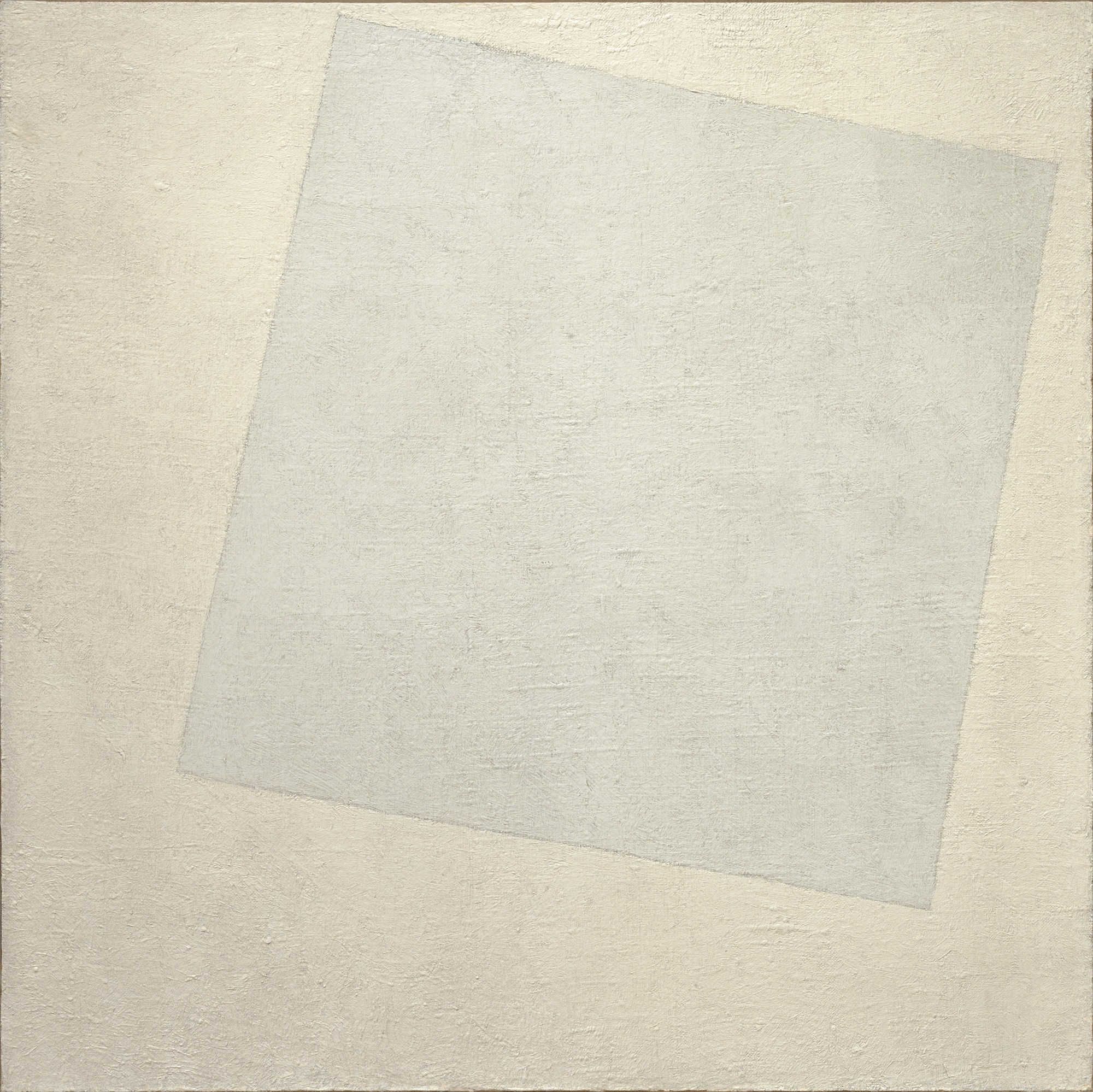
Suprematist Composition: White on White? More like white on beige.
Malevich and many other artists hoped that the October Revolution was gonna be their time to shine. The October Revolution (also called the Bolshevik Revolution or the Great October Socialist Revolution) was the last phase of the Russian Revolution in 1917. The Bolshevik Party seized power and inaugurated the Soviet regime, the world's first constitutionally socialist state with the ideology of Communism. Malevich saw the revolution as the start of a new society, in which materialism would eventually lead to ultimate spiritual and material freedom. Malevich was all about spiritual and material freedom. He was the first artist to fully engage in geometric abstraction and by fully, I mean FULLY. Kazimir single handedly started a new movement called Suprematism. Suprematism focused on the essence of painting, reducing the pictorial means to a bare minimum. The movement got rid of all the conventional definitions of art, creating full artistic freedom. Which technically means you can do whatever right? Well Kazimir had a thing for geometric and monochrome compositions.
Suprematist Composition: White on White is one of the most revolutionary works. As I said, he loved geometric figures and monochrome colors and that’s what it is. A white square on a white square, that's what I call "a bare minimum!" He stripped his painting of the seemingly last essential attribute, color. Ok fair enough he used two different white tones, but they do kind of blend in if you look at them long enough.
A critic from the rival Constructivist movement once said: "The only good canvas in the entire Unovis exhibition is an absolutely pure, white canvas with a very good prime coating. Something could be done on it." BURN!

Featured Content
Here is what Wikipedia says about White on White
Suprematist Composition: White on White (1918) is an abstract oil-on-canvas painting by Kazimir Malevich. It is one of the more well-known examples of the Russian Suprematism movement, painted the year after the October Revolution. The white square is one of the Malevich's three suprematist squares, the other two being black and red.
Check out the full Wikipedia article about White on White