More about Gustave Caillebotte
- All
- Info
- Shop
Works by Gustave Caillebotte

Contributor
Gustave Caillebotte's hobbies were building yachts and collecting art.
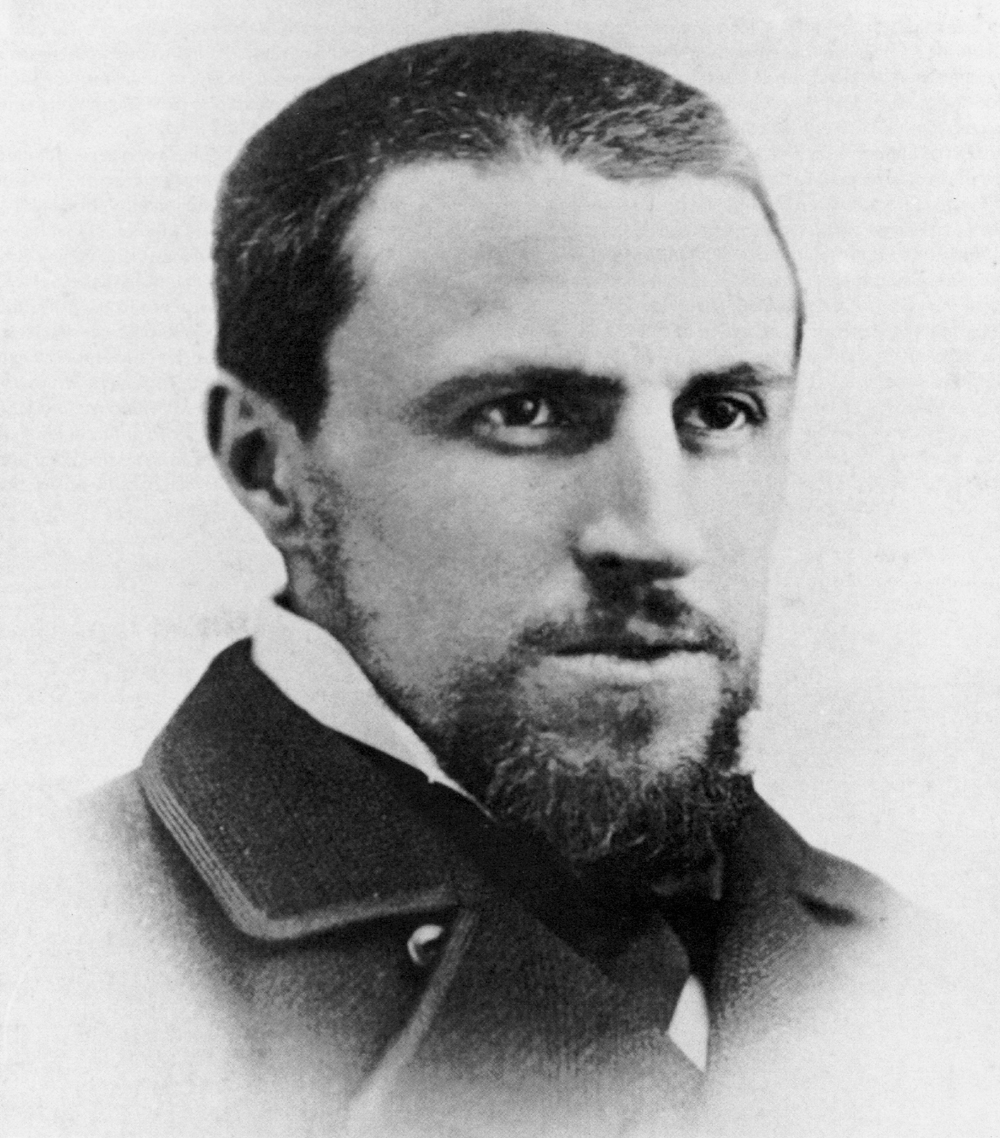
Gustave is definitely not the most famous French painter ever, but his family was pretty well known. Born in 1848 to a very upper-class Parisian family, Gustave and his family lived on rue du Faubourg-Saint-Denis in the type of house big enough to turn into a dozen unaffordable studios. The family also owned a large property about 12 miles south of Paris, which is where Gustave began to draw and paint.
At the age of 20, Gustave earned his law degree and 2 years later, his license to practice law, but shortly after that the the Franco-Prussian war started. Fortunately, this war only lasted for 9 months after which he returned home and continued to practice law for a while. It wasn't really his thing so instead he visited the studio of Leon Bonnat and began to study painting. His parents were totally OK with this. They had some space left in their big mansion where they converted one of the rooms into Gustave's first real studio. His parents even sent him to the Ecole des Beaux-arts (French for art academy), but apparently he didn't spend much time there. He preferred hanging out with the cool kids and befriended several artists who were also working outside the academy. In 1876, he was part of the second Impressionist exhibition, together with his new buddies Degas, Monet, Renoir, and Pissarro. Who needs art school anyway?
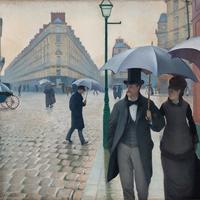
What separated Gustave from his famous friends was his gaze. While most of his friends focused on sexy can-can dancers and other typical Parisian scenes, Gustave painted the gloomy boulevards in the rain. He preferred to paint men dressed in black suits, finding their way through a Paris under construction after the war. Obviously, that wasn't what people wanted to see, let alone buy to decorate their living room. In 1874, Gustave’s dad died and he inherited his fortune, so who cares if he didn't sell his paintings? He could paint whatever he wanted! This inheritance also allowed him to become a major art collector. A large part of the Musee d’Orsay’s Impressionist collection used to be his, and his stamp collection is now in the British Museum. It is also said that he used his inheritance to financially support his painter friends.
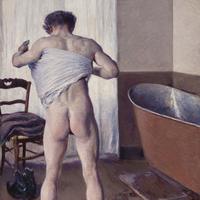
Despite not really selling any paintings, thus not really having a job to begin with, Gustave retired at the age of 34 and devoted himself to gardening and building and racing yachts. He lived with his mother until he was 39 and never married, but they do say he had a mistress. This alleged mistress was Charlotte Berthier, she was not only very young, but was also from a lower class. Maybe he was afraid to tell mom? Others say he might not have been super hetero. Since his most famous paintings are full of beautiful men, sometimes naked and/or sweaty, some historians suggest he might have been gay. One of my favorite paintings to support this statement is Boating Party (Oarsman in a Top Hat). A scene for which Gustave must have sat down in a tiny boat, together with this handsome oarsman. The oarsman is wearing a fancy suit and hat, but really, it's his crotch that's not to be missed.

Featured Content
Here is what Wikipedia says about Gustave Caillebotte

Gustave Caillebotte (
French: [ɡystav kɑjbɔt]; 19 August 1848 – 21 February 1894) was a French painter who was a member and patron of the Impressionists, although he painted in a more realistic manner than many others in the group. Caillebotte was known for his early interest in photography as an art form. Because of his family's wealth, he was a patron of many of his fellow Impressionists. Upon his death, his bequeathed collection of their works became the central collection of Impressionism for the French Republic, despite considerable controversy.
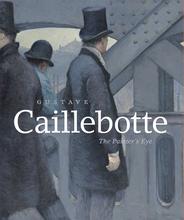
His most well known work is Paris Street; Rainy Day, known for qualities such as its mise-en-scène presentation. The Art Institute of Chicago acquired the painting in 1964 and his work drew more attention in the 1970s. Although Caillebotte has long been regarded for his philanthropy and support as a patron and promoter of Impressionism, he did not have an international retrospective of his work until 1994, 100 years after his death. In 2022, when France successfully attained possession of Boating Party, known for its close-up action perspective, through a National treasure of France declaration process, the country asserted the work's cultural significance and prominence with a celebrated display, followed by a national tour of the work, and then an exhibition of Caillebotte's work that toured internationally.
Check out the full Wikipedia article about Gustave Caillebotte