More about Palace of Versailles
- All
- Info
- Video

Works at Palace of Versailles

Sr. Editor
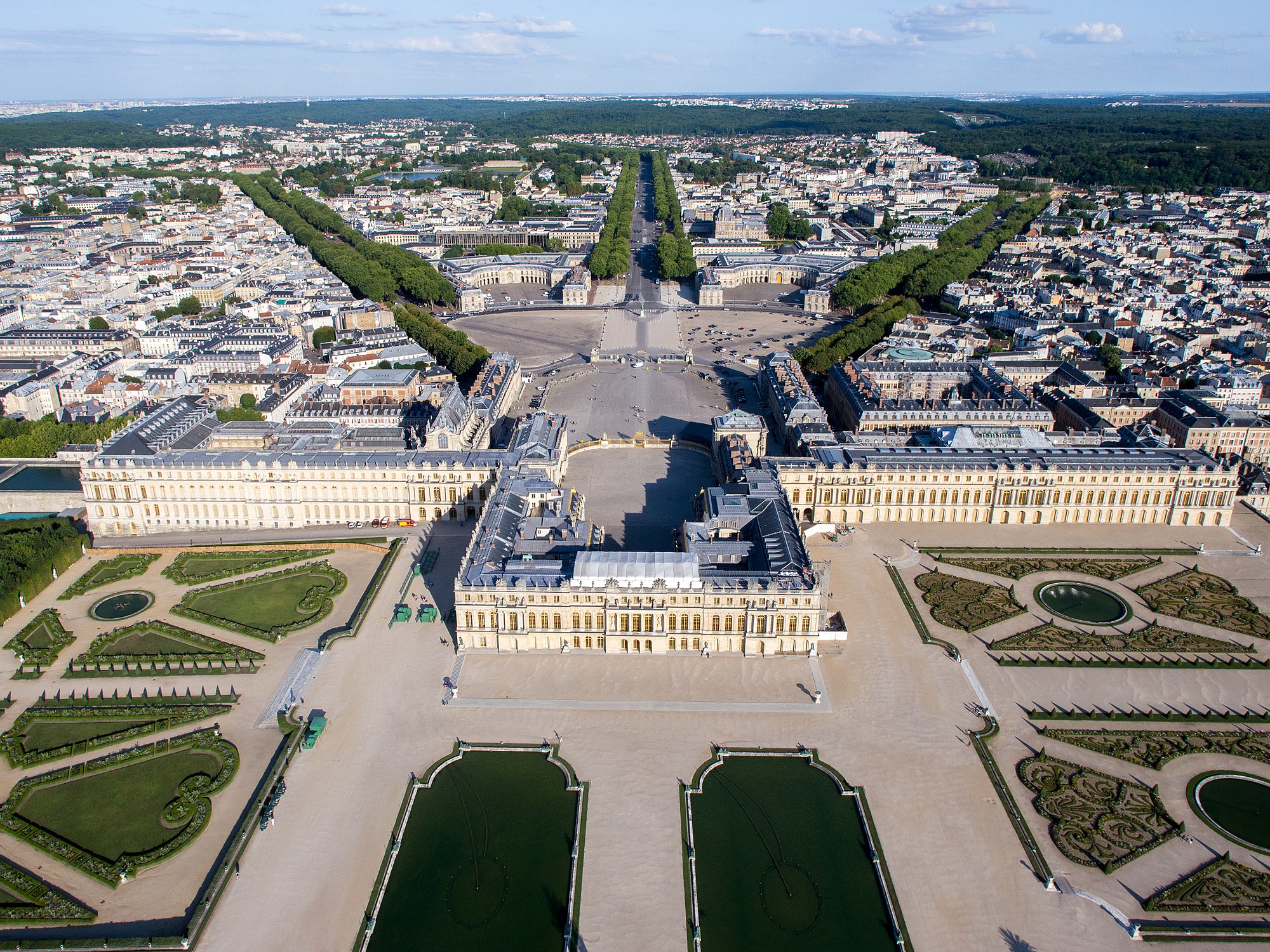
The Palace of Versailles all started with a simple hunting lodge ordered by Louis XIII in 1624.
New sections of the Palace went up and were torn down with each successor until heads were chopped off in 1789 during the French Revolution.
In 1793, Charles-François Delacroix, Eugene Delacroix’s father, wanted to melt down the statues in the gardens for cannons for the Revolution. His proposal was thankfully turned down when it was declared that Versailles and its contents belonged to the people. It became a storehouse for the other pilfered artwork confiscated from the bourgeois and churches.
The Palace itself covers 16 acres and the gardens spread out over 197 acres.
Though we think of Versailles as a massive palace with a few large grand apartments strewn around the grounds it was really more of a large apartment complex. Sure there were extravagant living quarters for the King and Queen and their favorites, in the hallways however, were approximately 350 small apartments, sometimes only one or two rooms that the courtiers got to fight over and trade like bargaining chips.
In 2008, Jeff Koons had a large-scale exhibit here with his shiny balloon sculptures. It was one of those weird juxtuposition modern/old type of things. The French were not amused.
The Palace is exceptionally well preserved making it perfect for filming. Some of them from the past 25 years: Dangerous Liasons, The Affair of the Necklace, Marie Antoinette, Midnight in Paris, and Farewell, My Queen.
Read a longer blog post about my visit to Versailles last summer.

Featured Content
Here is what Wikipedia says about Palace of Versailles
The Palace of Versailles (French: Château de Versailles) is a château and historic monument in Versailles in the Yvelines department of France, southwest of Paris. It served as the principal residence of the French kings Louis XIV, Louis XV, and Louis XVI.
The king, the court, and the royal government lived there permanently from 6 May 1682 until 6 October 1789, except during the Regency years (1715–1723). Conceived by Louis XIV to glorify the French monarchy, the palace became the most important architectural project of his reign and is considered one of the masterpieces of French classical architecture. It exerted major influence across Europe in the 18th and 19th centuries in architecture and the decorative arts.
The palace forms a vast and complex ensemble of courtyards and buildings designed to maintain architectural harmony. It covers about 63,154 square metres and contains roughly 2,300 rooms, around 1,000 of which belong to the National Museum of the History of France housed in the Palace and the Trianons.
The park of the Palace of Versailles covers 815 hectares today, compared with more than 8,000 hectares before the French Revolution. Of this area, 93 hectares are formal gardens. The estate includes numerous features, such as the Petit Trianon and Grand Trianon—later used by Napoleon I, Louis XVIII, Charles X, Louis Philippe I, and Napoleon III—as well as the Hameau de la Reine, the Grand and Petit Canal, a former menagerie, the Orangerie, and the Pièce d'Eau des Suisses. As one of the most visited sites in Europe, the estate is central to ongoing discussions about managing overtourism.
Check out the full Wikipedia article about Palace of Versailles