More about Keith Haring
- All
- Info
- Shop

Sr. Editor
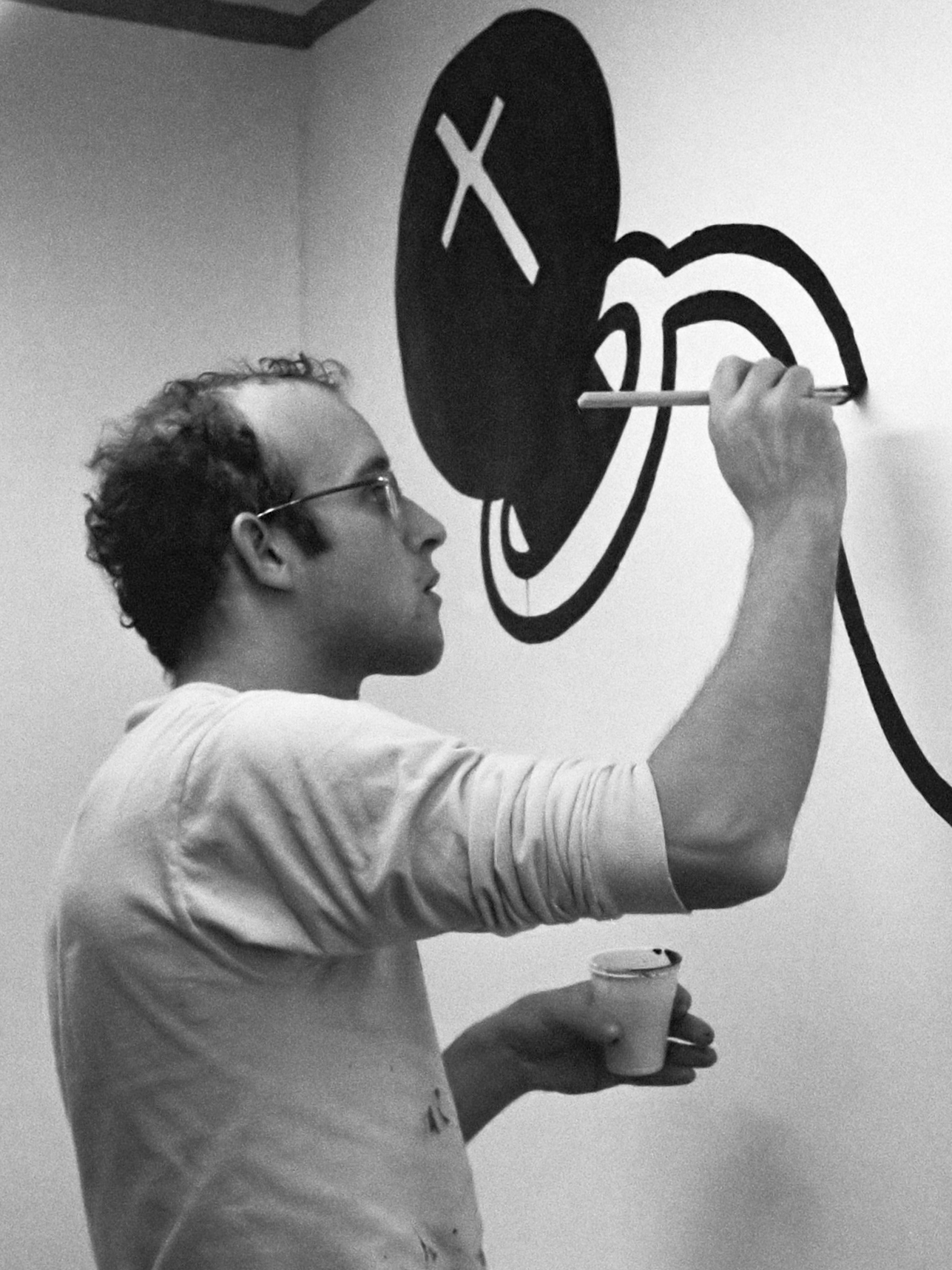
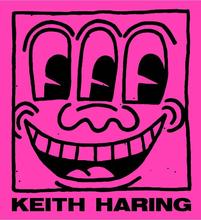
Even if you’ve never heard of Keith Haring, I’m sure you’ve seen his squiggly stick figures on a hipster’s t-shirt.
His quirky style may have been influenced by his Pa, who was a cartoonist. Haring began as a street artist and would vandalize subway signs and billboards with his bright graphics that told stories of urban life.
His career took off and like every successful person, he was accused of “selling out.” Haters gunna hate! But even though he designed a jacket for Madonna, a lot of Haring’s stuff was politically motivated public art, bringing worthy messages to the masses. He brought awareness to Apartheid, AIDS and the growing crack-cocaine epidemic.
The openly gay artist was diagnosed with AIDS at the age of 30 and used his last remaining years to raise funding for AIDS organizations and children’s charities. If every artist who “sold out” used their money like that, maybe we wouldn’t mind so much.
He's been honored by famous musicians, other artists and the LGBTQ community. Check out perhaps his highest honor: the Google doodle.

Featured Content
Here is what Wikipedia says about Keith Haring
Keith Allen Haring (May 4, 1958 – February 16, 1990) was an American artist and activist. His bold, graphic imagery has "become a widely recognized visual language". Emerging from New York City's downtown art and graffiti scenes in the early 1980s, he transformed subway chalk drawings into an internationally celebrated career that bridged street art and Pop art.
Haring first gained public attention through spontaneous white-chalk drawings on unused black advertising panels in New York City subway stations, featuring crawling babies, barking dogs, dancing figures, and other animated symbols. As his reputation grew, he gained gallery representation and produced large-scale paintings and sculptures. Between 1982 and 1989, he created more than 50 public murals, many of them voluntarily for hospitals, schools, and community spaces.
Much of Haring's work addressed political and social issues, including anti-apartheid activism, the crack epidemic, homosexuality, safe sex, and AIDS awareness, often using his own iconography to communicate urgent messages. In 1986, he opened the Pop Shop to make his art widely accessible through affordable merchandise. In addition to solo exhibitions, he participated in major international shows including documenta in Kassel, the Whitney Biennial in New York, the São Paulo Biennial, and the Venice Biennale. After Haring died of AIDS-related complications in 1990, the Whitney Museum of American Art organized a retrospective of his work in 1997.
Haring’s legacy has also been recognized within LGBTQ history. In 2014, he was among the inaugural honorees of the Rainbow Honor Walk in San Francisco, a walk of fame recognizing LGBTQ people who made significant contributions in their fields. In 2019, he was one of the inaugural 50 American "pioneers, trailblazers, and heroes" inducted onto the National LGBTQ Wall of Honor at the Stonewall Inn in New York City.
Check out the full Wikipedia article about Keith Haring