More about Tokyo Fuji Art Museum
Contributor
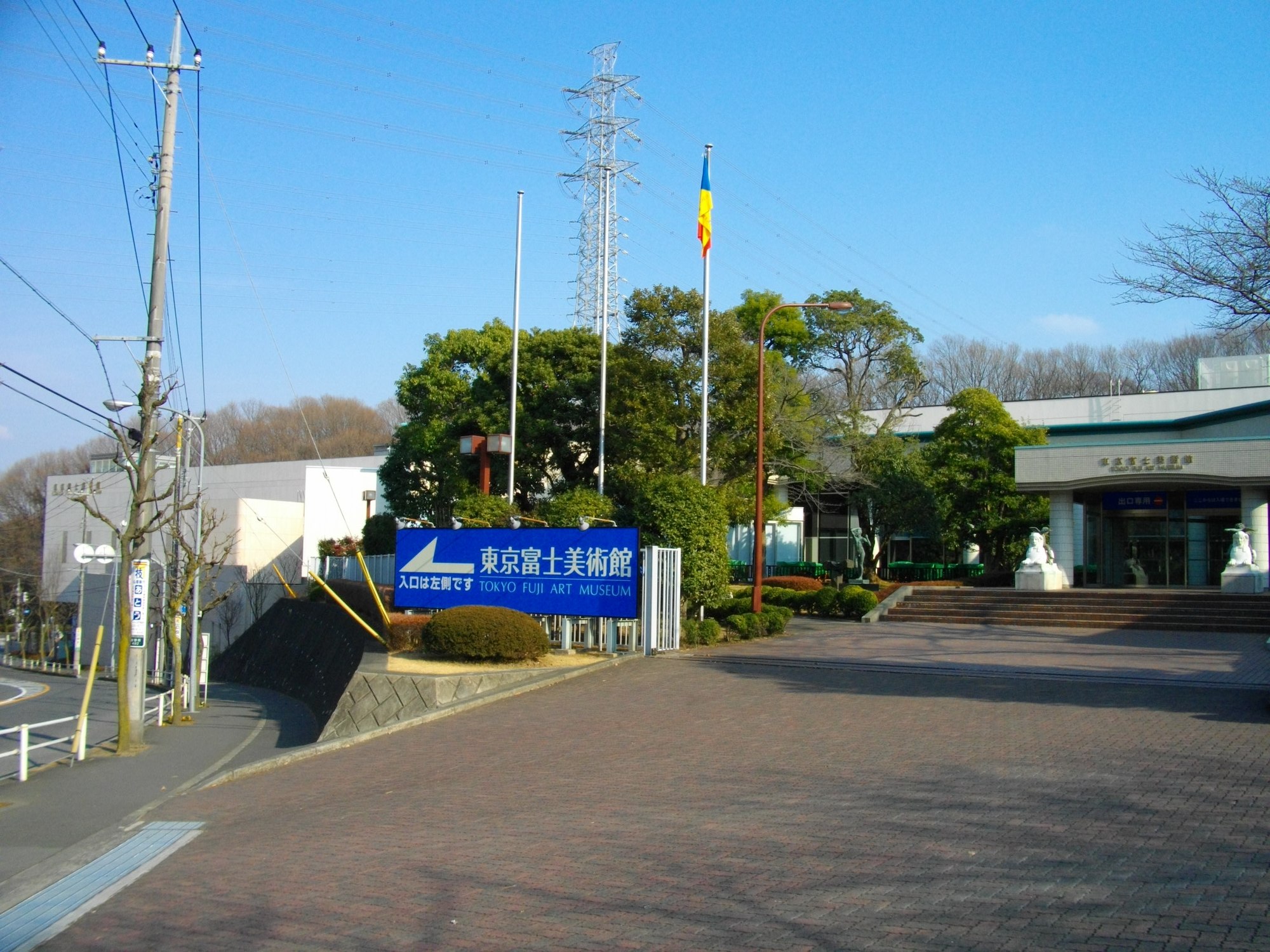
The Tokyo Fuji Art Museum, sadly, is not as close to the active volcano as we’d imagined.
They decided to go safe and set it up 50 miles away in Tokyo. They should have stayed at Shizuoka, it had a better view. But, it’s cool. Tokyo is the logical solution. You’d rather be accessible to 9 million people instead of a town of 700,000.
The Art Museum was conceived by spiritual thinker, peace advocate, nuclear disarmament propagator, and educationalist Daisaku Ikeda. Now, there is nothing ordinary about this guy. He is revered in Japan and we don’t see why he shouldn’t be. He believes that the world can change through dialogue. This Museum was supposed to open one of those dialogues.
In 1974, a French man was visiting Tokyo when he ran into Daisaku. This casual acquaintance turned into quite the friendship. They even published a book together. This visitor from France had quite the credentials. He became the Chief Curator of the Department of Painting at the Louvre at the age of 30. Thirty! When M. Rene Huyghe met Daisaku Ikeda he was running the show at Musee Jacquemart-Andre as their director. They were both in the right place at the right time to create a unique legacy.
The Museum building was completed in 1983, a decade after Rene and Daisaku met. The Min-On Concert Association, also started by Daisaku Ikeda, was responsible for setting up the Museum. Ikeda wanted the people of Japan to learn/unlearn by experiencing art. Rene Huyghe believed that French and Japanese cultures differed in the way they treated art. The French Impressionists were all about sentiment, about a moment frozen in time. The Japanese, on the other hand, persisted towards the ideal.
Huyghe essentially kickstarted the Tokyo Fuji Art Museum. The first exhibition at the Museum was curated by Rene himself. This French-Japanese alliance was doing wonders for the art scene in Tokyo. From books to art museums, these guys were mostly in-step with each other. Ikeda and Huyghe made a good team. They would probably make an even better detective duo. But, they stuck to art, and the Tokyo Fuji Art Museum got more than 30,000 paintings to take care of. The paintings have been exhibited at various exhibitions around the world.
Sources
Sources
- "Culture: Tokyo Fuji Art Museum: Daisaku Ikeda Website." Home. Accessed August 01, 2019. https://www.daisakuikeda.org/main/culture/cultural-institutes/tfam.html.
- Admin. "Huyghe, René." Dictionary of Art Historians. February 21, 2018. Accessed August 01, 2019. http://arthistorians.info/huygher.
- Chanel, Gerri. Saving Mona Lisa: The Battle to Protect the Louvre and Its Treasures from the Nazis. London: Icon Books, 2018.
- "TFAM Time Line." TOKYO FUJI ART MUSEUM. Accessed August 01, 2019. https://www.fujibi.or.jp/en/about-our-museum/tfam-timeline.html.
- Hinson, E. Glenn. The Evangelization of the Roman Empire: Identity and Adaptability. Macon, Georgia: Mercer University Press, 1981.
- Gokita, Akira. "Tokyo Fuji Art Museum: Creating Peace through Culture." Soka Gakkai International (SGI). March 17, 2016. Accessed August 01, 2019. https://www.sgi.org/in-focus/2016/Tokyo-Fuji-Art-Museum.html.
Featured Content
Here is what Wikipedia says about Tokyo Fuji Art Museum
Tokyo Fuji Art Museum (東京富士美術館, Tōkyō Fuji Bijutsukan) was established by Daisaku Ikeda and opened in Hachiōji, Tokyo, Japan, in 1983. A new wing was added in 2008.
The Fuji Art Museum is owned by the Sôka Gakkai, a buddhist movement which runs several museums.
Check out the full Wikipedia article about Tokyo Fuji Art Museum