

More about Alexander the Great and Campaspe in the Studio of Apelles
Contributor
Alexander the Great was a pretty chill dude. And, as they say, it's best not to look a gift concubine in the mouth.
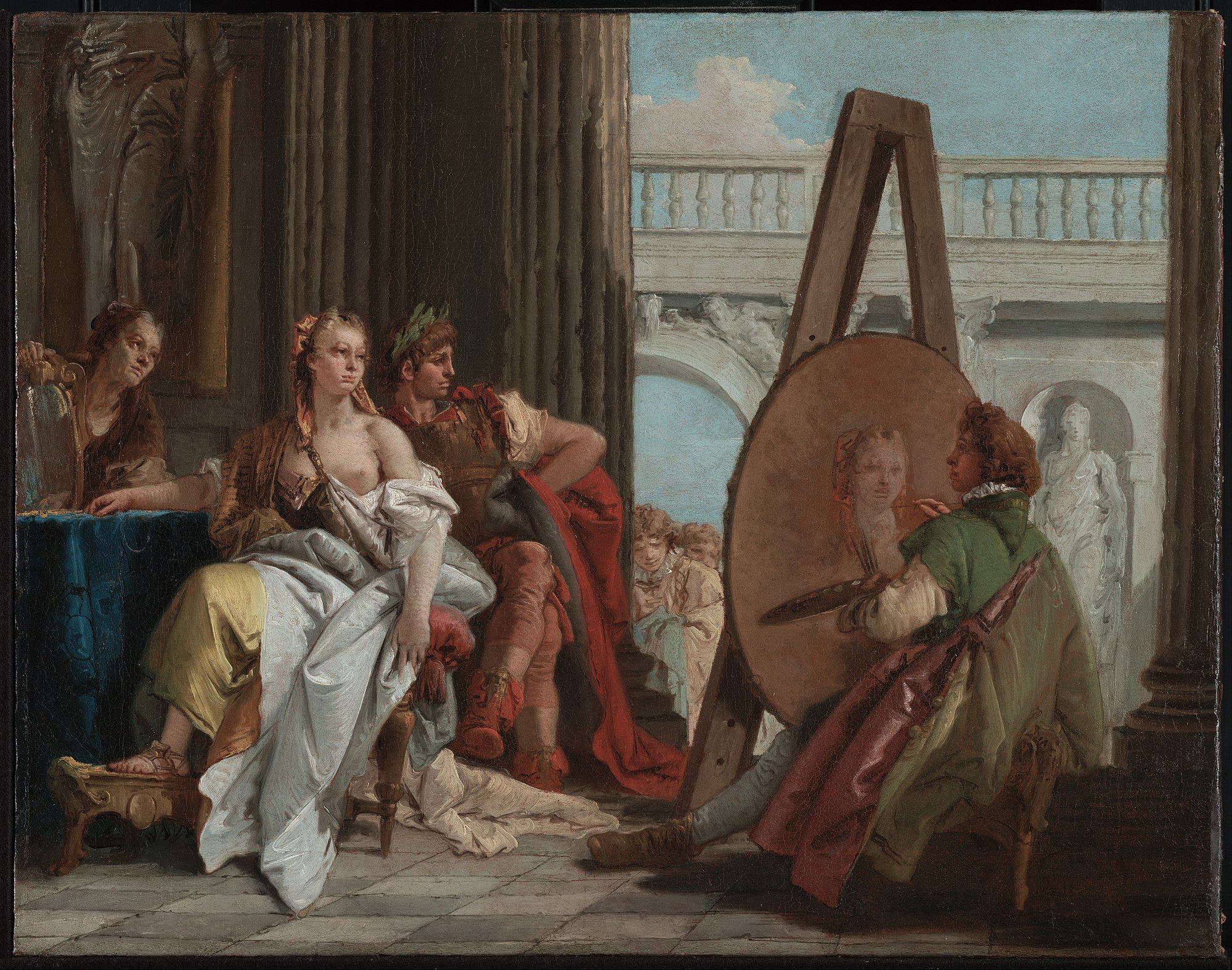
See, Campaspe was Alexander the Great's favorite concubine. Apelles was Alexander's favorite painter, and when he was asked to paint Alexander and Campasme, he fell in love with Campasme. Alexander found out, so he had a dilemma. His favorite painter was lusting after his favorite concubine, what to do? Kill them both, you'd assume. However, he did not!
Instead he thought about it logically, and gave Campaspe to Apelles as a gift. His reasoning was along the lines of "I lose my favorite concubine, but hey I have lots of competent concubines, and in any case I'm bisexual. Favorite painters are more important and harder to replace, so I might as well make this one happy." And happy he was, painting that nipple.
The French government confiscated this painting from the estate of a Jewish collector who had the misfortune to die in 1941 in Paris (not a good time to be Jewish in Paris). The French sold it to arch villain Hermann Goering and after the war, the painting ended up in the Louvre. It took until 1999 for the descendants of the original owner to get it back. They sold it to the Getty Museum, where it remains today.

Featured Content
Here is what Wikipedia says about Alexander the Great and Campaspe in the Studio of Apelles
Alexander the Great and Campaspe in the Studio of Apelles is an c.1740 history painting by the Italian artist Giovanni Battista Tiepolo. It depicts a scene based on a story recorded by Pliny the Elder. Having commissioned a portrait painting of his lover Campaspe from the gifted court painter Apelles, Alexander the Great became aware of the love the artist felt for his mistress and relinquished her to him.
It was one of three paintings Tiepolo produced inspired by the legend. The painting is today in the Getty Museum in California. An earlier depiction by Tiepolo is now in the Museum of Fine Arts in Montreal.
The subject has been treated by a number of other artists including Jacques-Louis David's Apelles Painting Campaspe in the Presence of Alexander the Great.
Check out the full Wikipedia article about Alexander the Great and Campaspe in the Studio of Apelles