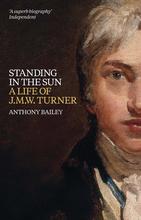
Joseph Mallord William (J.M.W.) Turner managed to thrash, scrape, fling and in every other physical and visceral way raise landscape painting to the same level of respect as history paintings.
The Rise of an Artist
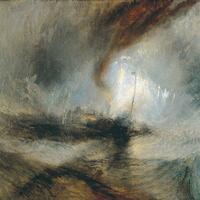
No one knows exactly when Turner was born but he himself cites the date as April 23, 1775, possibly chosen because it is shared with a little known writer named Shakespeare. This early act of self-aggrandizement was not coincidental and matches his reputation for being ambitious and sometimes egotistical. So… he’s like every other successful artist? His enduring popularity would suggest otherwise. Despite being known, criticized, and eventually applauded for a mature style which often contained barely discernable ships, trains, and land amidst an unfocused haze of oils (and sometimes watercolors), Turner actually began his artistic life studying architecture with topographers. At one point he wanted to be an architect which to me is the equivalent of Bjork stating she ghost writes for Taylor Swift. Despite ability and talent, the styles just don’t match. Thankfully for us, although being very good with more structured subject matter, Turner turned (feel free to guffaw) to nature which he said, “address[ed] itself to the imagination.”
Turner began painting as a child, was selected to study at the Royal Academy at 15 by Sir Joshua Reynolds, and managed to get his first painting exhibited in the Royal Academy at the wide-eyed age of 21. He was given full-fledged membership by 27, an honor towards which Academy members apparently thought he didn’t show enough appreciation. He probably felt he didn’t need to kiss the rings of a bunch of rich guys when he had worked his ass off against all odds in order to get into their club. I must say, I agree.
The Man and the Madness, or Turner: Artist or Phoenix?
Young Turner did not have an easy life. He was born on the wrong side of the Thames in an area called Maiden Lane (known for the type of maidens who hang out in lanes). His father was a barber, his younger sister Helen died at the age of 4, and, likely as a result, his mother Mary went insane. Mary was put in Bedlam in 1799 and died there in 1804. This may have been where Turner met one of his earliest patrons Dr. Thomas Monro. A man who was just mad about the arts, Monro was the Principal Physician at Bethlem Royal Hospital, a physician to King George III, and an amateur artist who promoted a young group of artists called the “Monro Circle.” He was also known (and eventually fired) for horribly mistreating the mentally ill. Too bad he couldn’t have worked through that aggression in his art.
A Reputation in Decline or Money, Money, Money, It’s a Rich Man’s World
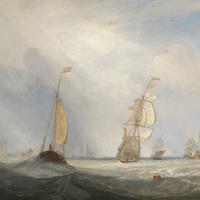
Early on, amidst some family drama, Turner was sent to live with his uncle in the seaside town of Margate. It was here that he began displaying a serious interest in art and seascapes. Between his uncle’s prompting and his father’s beaming pride (he had begun selling young Turner’s work from his shop window) Turner started supporting himself and his family with his art and enrolled in the afformentioned Academy classes. It is perhaps this early pressure to produce art not for pleasure like many of the dandies in the art world, but for profit that made him so ambitious, and by outsider’s perspectives, greedy. One account by Sir Walter Scott who’d hired him to create etchings to accompany a work on Scottish scenery said, “Turner’s palm is as itchy as his fingers are ingenious, and he will … do nothing without cash and anything for it.” Apparently giving a person a commission quote and then charging them for extras like the frame was not done in 19th C England where gentleman were expected to take people at their word when it came to financial matters.
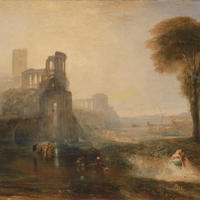
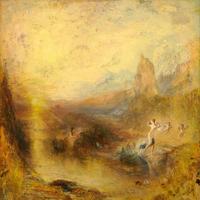
As he leaned more and more towards expressing what he saw and felt in a landscape rather than what was actually there he became less and less respected and understood by his public. In fact, in 1845 James Lenox (American art and book collector who founded the Lenox Library that later merged to become part of the New York Public Library) ordered a piece by Turner based solely on his great reputation. When the work arrived he openly expressed his disappointment with its “indistinctness” to which Turner replied, “Tell Mr Lenox that indistinctness is my forte.” Touche, Mr. Turner.
Sexy Sexy Scandal Sex
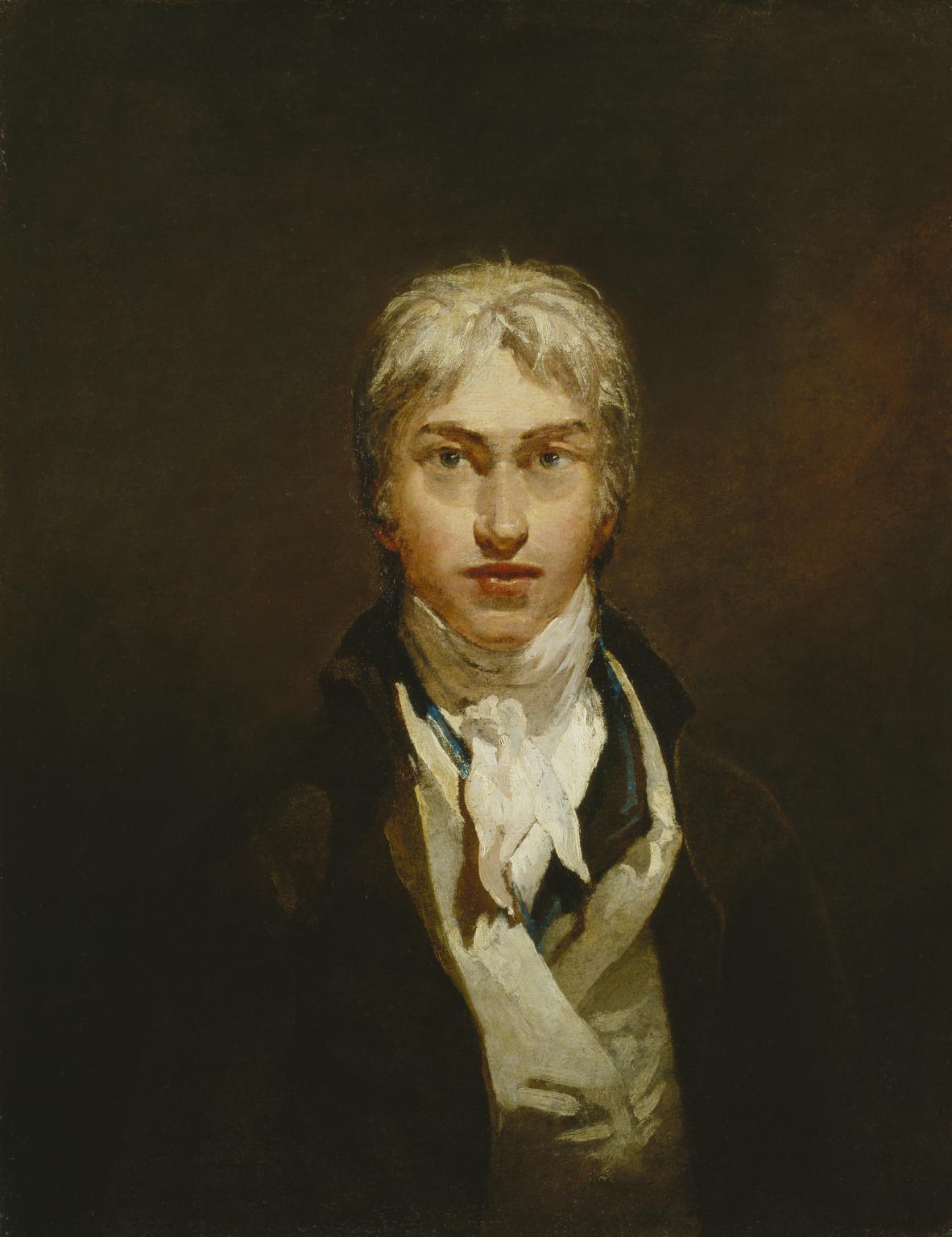
Turner didn’t age well. He was known as a man with a slovenly appearance and attitude. He barely spoke and when he did it was with a surly attitude and thick barely understandable cockney accent. This did not stop him from getting some. Mrs. Sarah Danby was the wife of an organist, had 4 children, and when her husband died in 1798 happened to be neighbors with a young Mr. Turner who was anywhere from 11-15 years her junior. She gave birth to two more children, daughters Evelina and Georgiana. They would be given small pensions in Turner’s will, Sarah would not. Why would Turner give these two women money and not the woman who he had lived with and whose visage is among his copious amounts of erotic art? It’s assumed that the two women were his offspring, but the details as to why Mrs. Danby was cut from his will are unknown. I’m gonna go ahead and say it’s connected with the fact that Turner’s live-in maid Hannah was also Sarah’s niece. Upon his death Hannah received a larger chunk of his will than his daughters, not to mention some of the paintings he had refused to sell. Love triangle much? Or maybe it has to do with Sophia Caroline Booth, the mistress he lived with for 18 years when visiting Chelsea (he would eventually die by her side). Little is known about their relationship other than he referred to himself as “Mr. Booth” on these visits and may have actually cared for her (this last speculation is based solely on the fact that he kept her around so long).
Sexy Sexy Erotic Art, or The Inexplicable Pudenda of Woman
Turner loved the ladies. He loved them so much that over his career he produced over 30,000 known works of erotic art. When he died art critic, Turner’s #1 fan, and staunchly puritanical Victorian, John Ruskin discovered what he called, “painting after painting of Turner's of the most shameful sort - the pudenda of women - utterly inexcusable and to me inexplicable". He told the public he burned all but a small portfolio of the drawings but the Tate’s Turner experts say that based on the huge amount of these pictures they found in a weirdly articulate filing system of Ruskin’s devising (with the close-up drawings having been folded over/out of sight) none of them were burned. Ruskin may have been so enamored by Turner that he couldn’t bear to burn the images, I choose to believe that he kept them as a personal porn stash.
The Sun is God
Upon his death in 1851, Turner bequeathed all of his unsold paintings to Britain with the intention that they be exhibited together in a permanent gallery. Instead, many of the paintings were sadly held in storage and later shipped off to other collections. He also left and a small fortune to “decayed artist” (someone needed to fight off that 1851 zombie epidemic), which was contested and partially split up by his bickering relatives. His supposed last words “The Sun is God” is the unofficial tagline of Burning Man.













An artist who is also a greedy ambitious egotist? Why that is unheard of, NOT!