More about Compton Verney House
Works at Compton Verney House

Contributor
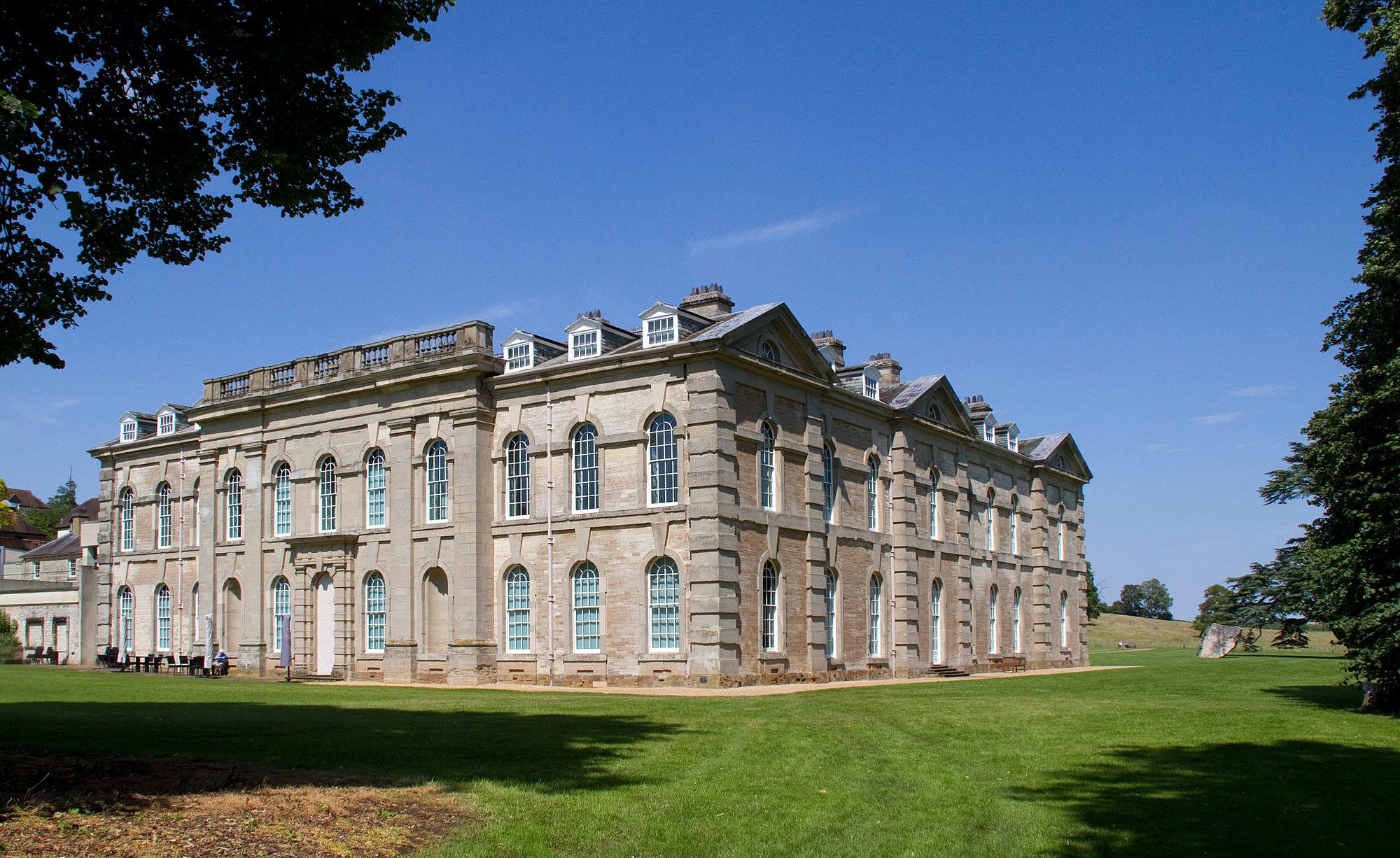
Like a lot of buildings in the UK, the Compton Verney place is OLD.
A manor was first built on this land as early as 1150, and it was used by the British Army during WWII. Since then, the plot passed through many hands until in 1993 when the dilapidated property was bought by millionaire Sir Peter Moores who turned into the art galleries we know and love today. The goal of these galleries is to focus on types of art that are not as represented in British museums, such as folk art and Medieval Germanic art.
This is a great destination for nature lovers as well. There are over 120 acres of manicured gardens to take a stroll in and plenty of grassy areas to rest your bum after a day of strenuous art viewing.

Contributor
About two hundred and fifty years ago, a miraculously gifted gardener and landscape architect, Lancelot (a different guy from Sir Lancelot) "Capability" Brown, designed the 120-acre grounds on which the Georgian Compton Verney House now lives.
People call him "Capability Brown," the story goes, because he used to tell his clients, "your property has capability," preserving the sanctity of their egos while subtly indicating that they need him like a mouse needs a hole in the wall.
The house gets its name from the storied parish of Compton Verney, population about the size of an extended-family cookout. Originally, Compton, not Kendrick Lamar and Dr. Dre's Compton, but the less famous namesake, had Saxon inhabitants, and two manors appear in the Domesday book. These Germanic Saxons were Anglos, but they were not yet Protestants, and if you called them White, they would have raised an eyebrow at you, and said the Olde English equivalent of "mate! what'r'you on about?" By the time of the designs of Capability Brown and the Scottish architect Robert Adam, it was governed by John Peyto-Verney, 14th Baron Willoughby de Broke. For 450 years, the Verneys lived there, but they eventually had to rent it out to make ends meet, and, after World War I, they sold it to Leeds soap kingpin Joseph Watson. From the perspective of the Crown, Watson's image was as squeaky clean as his products, and, the year after he bought the manor, the Crown raised his name to the peerage as Baron Manton of Compton Verney. He never had a chance to live there, and his oldest son sold it to someone, and the house changed hands until the War Department requisitioned it during World War II.
Forty-eight years later, the place was looking like an extra in a zombie movie when, in a stroke of grace, the Peter Moores Foundation rescued it from total collapse. With Stanton Williams Architects, they built a new wing and gave the House a makeover and lots of reconstruction. The UK press are as London-centric as cookie monster is cookie-centric, but the Compton Verney gives journalists lots of reasons to cover Warwickshire. Its permanent collection features Shang period Chinese bronzes, Joshua Reynolds works, and folk art which inspired the textiles of master artist Enid Marx, a cousin of Karl. All kinds of events and installations have lit up the Compton Verney on the world stage, from Aleksandra Mir's Plane Landing, in which a giant inflatable plane hovered above the House as if about to land, to filmmaker Peter Greenaway's Luper, which displayed 92 suitcases associated with Tulse Luper, a character from his film "The Draughtsman's Contract," to the work of the Brothers Quay, Wassily Kandinsky, Kent Monkman, James Luna, Minerva Cuevas, Francis Bacon, Andy Warhol, Louise Bourgeois, Alice Kettle, and Vanessa Bell. If you're a BBC "Antiques Roadshow" fiend, you would've noticed Compton Verney making an appearance.
Sources
Sources
- "Biography." Kent Monkman, https://www.kentmonkman.com/biography.
- Bolton, Arthur James. The Architecture of Robert & James Adam (1758-1794). London: Country Life, 1922.
- "Compton Verney announces Capability Brown park funding." BBC, Nov. 29, 2013, https://www.bbc.com/news/uk-england-coventry-warwickshire-25150343.
- Elliott, Bridget, and Anthony Purdy. "Man in a Suitcase: Tulse Luper at Compton Verney." Image & Narrative, Aug. 2005, http://www.imageandnarrative.be/inarchive/tulseluper/elliot_purdy.htm.
- Parissien, Steven. "Small Wonders: Compton Verney." Apollo, Sep. 2, 2013, https://www.apollo-magazine.com/small-wonders-compton-verney/.
- Smith, Kirstie. "Quick-thinking bystanders save man's life at Antiques Roadshow filming at Compton Verney." The Courier, Jul. 3, 2019, https://www.leamingtoncourier.co.uk/news/people/quick-thinking-bystande…
- Sweet, Fay. "Obituary: Enid Marx." The Independent, May 19, 1998, https://www.independent.co.uk/news/obituaries/obituary-enid-marx-115844….

Featured Content
Here is what Wikipedia says about Compton Verney House
Compton Verney House is an 18th-century country mansion at Compton Verney near Kineton in Warwickshire, England. It is located on the west side of a lake north of the B4086 about 12 miles (19 km) north-west of Banbury. Today, it is the site of the Compton Verney Art Gallery.
Check out the full Wikipedia article about Compton Verney House