More about Menil Collection

Contributor
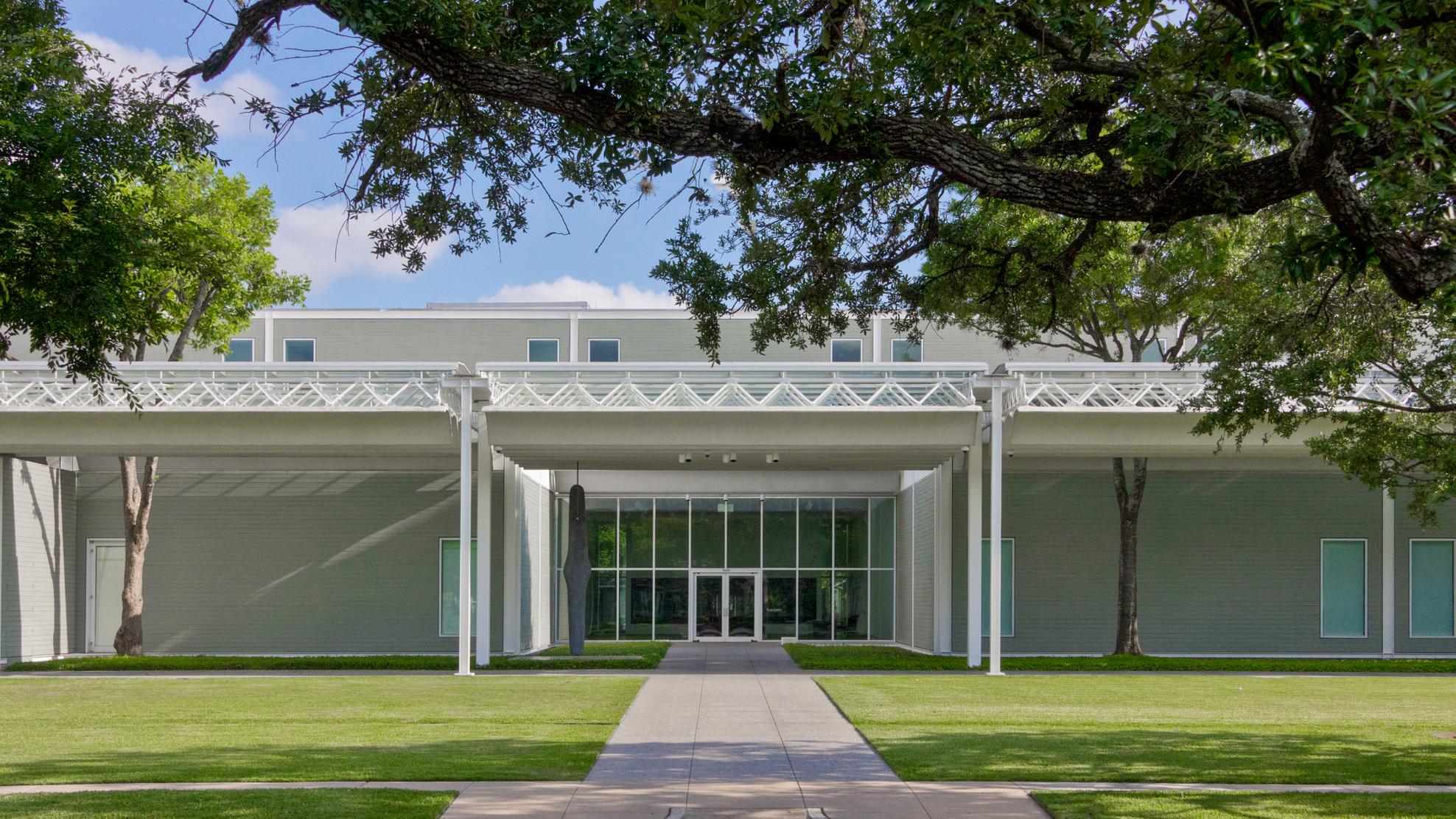
The Menil Collection is named after Dominique and John de Mentil whose collection of more than 17,000 works of art is on display.
They’re also the folks behind the Rothko Chapel, their daughter started the Dia Foundation; they are as The New York Times put it, a modern familia di Medici. The French couple met during a ball at Versailles and were both of noble lineage, but the royal love story takes a hard left turn after that. Dominique's father was an oil-exploration-engineering nerd, John’s father was broke, and their honeymoon was a trip through Morocco by public bus.
The couple took the French values of liberty, equality, and brother/sisterhood very seriously. John helped fund the Black Panther’s free breakfast program in Houston and launched the political career of anti-poverty activist and congressman Mickey Leland. Dominique's approach was less direct, she and Mickey Leland organized one of the first desegregated art shows in the country and once attempted to gift Barnett Newman’s 6.5 tonne Broken Obelisk to the city of Houston in honor of Dr. Rev. Martin Luther King Jr., they rejected the gift so she put it in the Rothko Chapel instead.
This is to say that the Menil Collection is all about those democratic ideals and charges no admission. The museum consists of a main exhibition space designed by the same fella that’s famous for turning the Centre Georges Pompidou inside out, a building dedicated to Cy Twombly’s work, another holds a Dan Flavin, the fourth building is a consecrated chapel that Dominique’s son built to hold stolen art.
Or actually one specific piece of stolen art. When Turkey invaded Cypress most of the countryside was abandoned and subsequently relieved of all salable objects, including a fresco in the dome of a tiny chapel, which was liberated using chainsaws and shipped, in pieces, to a Turkish art dealer in Germany. The dealer offered to sell the “found” fresco to Dominique, she knew shady business was afoot and spent a year tracking down the fresco’s true origin. Once she figured out where it was from, she offered the archbishop responsible for chapel a deal in which she would ransom and restore the fresco in exchange for the right to display it in Texas for a while – the archbishop was down. Menil Collection upheld Dominique’s ethical legacy and returned the fresco to Cyprus in 2012.
Sources
Sources
- Brown, Jessica Bell. January 17, 2017. “How Black Modern Artists Defied a Singular Narrative in 1971.” Hyperallergic, 2017. Accessed October 12, 2017. https://hyperallergic.com/352161/how-black-modern-artists-defied-a-sing…
- Menil Collection. “About.” Menil Collection, 2015. Accessed Oct 12, 2017. https://www.menil.org/about
- Menil Collection. “Collections Overview.” Menil Collection, 2015. Accessed October 12, 2017. https://www.menil.org/collection
- Glueck, Grace. May 18, 1986. “The De Menil Family: the Medici of Modern Art.” The New York Times, 2017. Accessed October 12, 2017. http://www.nytimes.com/1986/05/18/magazine/the-de-menil-family-the-medi…
- Goodwin, Wade. March 14, 2012. “800-Year-Old Frescoes leave Texas for Cyprus.” NPR: All Things Considered, 2017. Accessed October 12, 2017. http://www.npr.org/2012/03/14/148602378/800-year-old-frescoes-headed-ho…

Featured Content
Here is what Wikipedia says about Menil Collection


The Menil Collection, located in Houston, Texas, refers to the museum that houses the art collection of founders John de Menil and Dominique de Menil, or to the collection of paintings, sculptures, prints, drawings, photographs and rare books it houses. The museum is said to rank with "the great private museums in the United States—the Frick in New York City, the Gardner in Boston, and the Phillips in Washington, D.C."
The future couple met at a ball at Versailles in 1930. At that time, Jean Marie Joseph Menu de Ménil (who subsequently Americanized his name) was 26 year-old baron. Dominique was the daughter of Conrad Schlumberger, who was a founder of the oil-drilling equipment company Schlumberger, which was the basis of the family fortune, which exceeded $100 million. Dominique converted to Catholicism, and they were married in 1931. The family settled in Houston in 1941, to escape the Nazi occupation of France.
The de Menils' most important mentor was a Dominican priest named Father Marie-Alaine Couturier. He taught them about modern art, with a strong interest in spirituality. He also advised them that with their great wealth, they should buy art and share it with the public. By the time of John de Menil's death in 1973, the couple had collected 10,000 art objects.
While the foundation of the collection is made up of a once-private collection, Menil Foundation, Inc. is a tax-exempt, nonprofit, public charity corporation formed under Section 501(c)3 of the Internal Revenue Code. Additionally, the Menil receives public funds granted by the City of Houston, the State of Texas, and the federal government through the National Endowment for the Arts.
Check out the full Wikipedia article about Menil Collection