More about Capitoline Museums
Works at Capitoline Museums


Sr. Contributor
The Capitolini Museum is the oldest public museum in the world, and the only one founded because of a breastfeeding wolf.
It all started in 1471 when Pope Sixtus IV wanted to regift a few old bronze statues to the city of Rome. The Romans got all hot and bothered because one of these was a thousand-year old Etruscan version of the she-wolf at the center of Rome's founding myth. It's exactly like if a sitting president gave us citizens the very boot used by George Washington to kick King George III in the butt while telling him to stay the hell out of 'Murica. The city government displayed the bronzes in the best place they could find: Outside the Palazzo dei Conservatori in the plaza atop the Capitoline Hill, one of the most sacred spots in the entire city.
Later popes added to the proto-exhibit with their own gifts until the whole show was brought inside the Conservatori. The big topic of conversation among Romans switched from 'look at all this nice stuff we have' to 'where should all this crap go?' An unexpected solution arrived in the form of an angry inbred emperor. Charles V, Holy Roman Emperor and he of the Habsburg jaw, was coming to Rome to challenge the King of France to hand-to-hand combat (France declined and Charles politely took an army into Provence to show the French that 'no' wasn't on the table). In the meantime, Pope Paul III had a little bit of a problem. The Capitoline Hill was a mess, surely unsuitable for Charles to see. The place looked so bad by that time that the locals called it Goat Hill #nameitgoathillagain. So Paul called in the reinforcements: Michelangelo. The powerhouse sculptor was given free reign to redesign the plaza, the Conservatori, as well as to design a whole new building.
While the Capitoline Hill was cleaned up in time for Charles' arrival, construction wasn't finished for more than two centuries. Once it was finally done in the mid 1700s, Pope Clement VII dubbed the new palace the Palazzo Nuovo (or... er, New Palace) and decreed it and the Conservatori would be two halves of the same museum. Construction may have taken forever, but at least everyone involved went through the trouble of including an underground tunnel connecting both palaces. Museum pro-tip: Underground tunnels are always a good investment.

Featured Content
Here is what Wikipedia says about Capitoline Museums
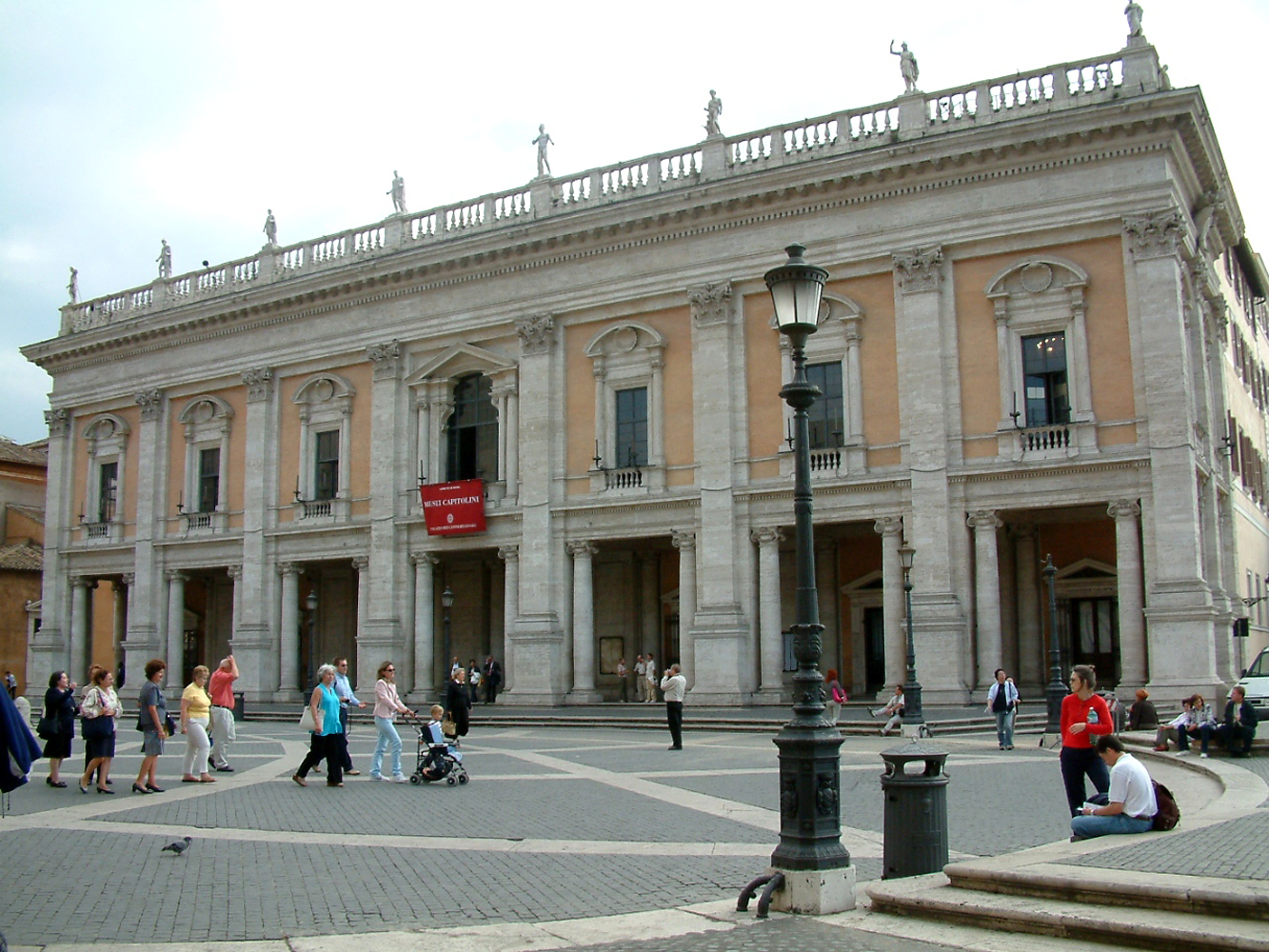
The Capitoline Museums (Italian: Musei Capitolini) are a group of art and archaeological museums located on the Capitoline Hill in Rome, Italy, and constitute the main civic museum complex of the city. Their principal buildings are the Palazzo dei Conservatori and the Palazzo Nuovo, which face each other across Piazza del Campidoglio, the square designed by Michelangelo in 1536 and completed over the course of the following centuries.

The museums are primarily dedicated to the art and history of ancient Rome, with a particular emphasis on Roman sculpture. The collection include celebrated works such as the Equestrian Statue of Marcus Aurelius, the Capitoline Wolf and the Dying Gaul, alongside inscriptions, coins, and other artifacts illustrating the civic and religious life of the city. The museums also include Renaissance and Baroque paintings, as well as the richly frescoed walls of the Conservators' Apartment in the Palazzo dei Conservatori, which depict scenes from Rome's early history.
The Capitoline Museums traces the collection's origins to 1471, when Pope Sixtus IV donated to the people of Rome a collection of ancient bronzes from the Lateran. In 1734 Pope Clement XII opened the museum to the public, making them among the earliest museums in the world accessible to all citizens. Today, the Capitoline Museums continue to attract visitors from around the world, hosting temporary exhibitions alongside their permanent collections and serving as a major cultural landmark in Rome.
Check out the full Wikipedia article about Capitoline Museums