More about Yukinori Yanagi
Works by Yukinori Yanagi
Contributor
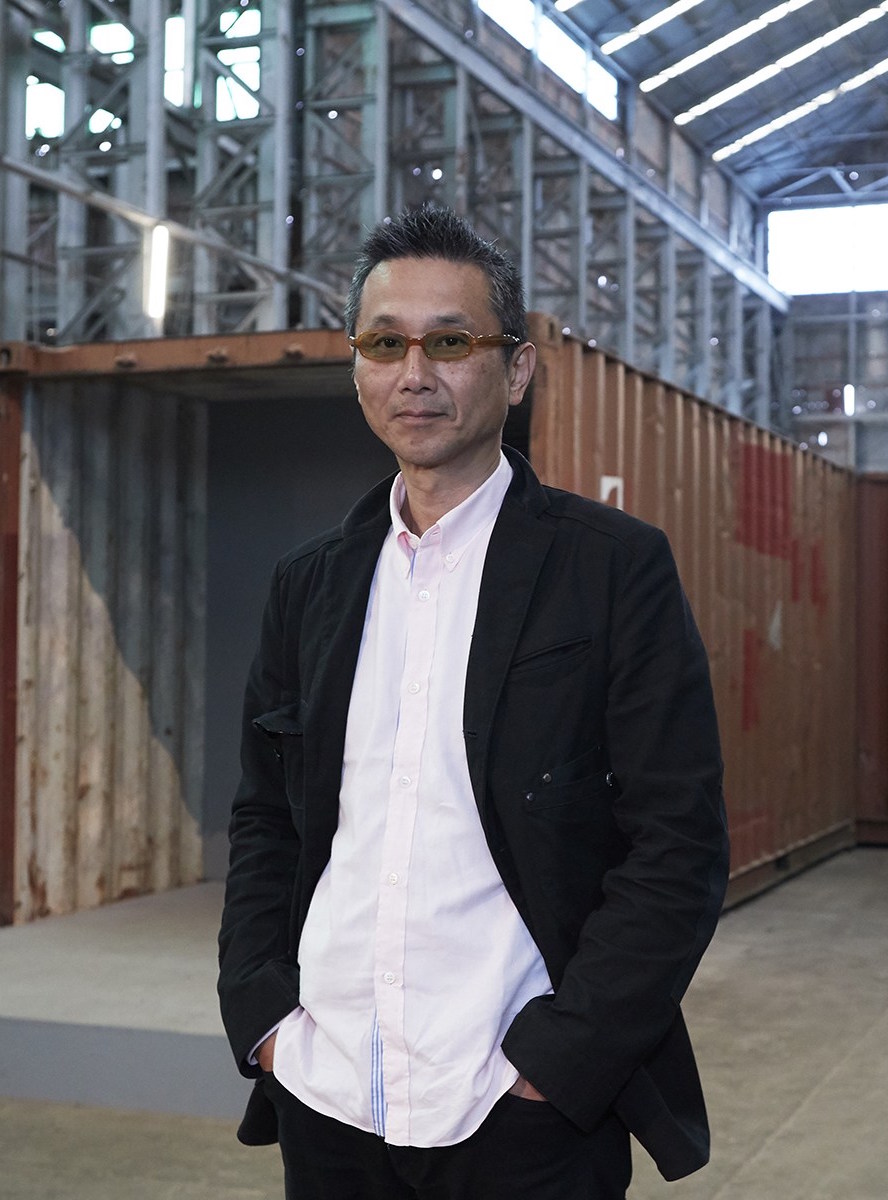
Yukinori Yanagi made a name for himself by getting ants to sculpt for him.
While getting his second MFA, Yanagi must have learned during that sculpture is too much hard work. All that building and hammering and thinking. Ugh, why do something yourself when you can get someone else to do it for you? He turns the ants into artists, setting them loose in sand-boxes or on paper, he simply records their ideas. Their main concepts seem to be escape and dig.
But it’s not just laziness (or laziness at all, he would follow ants on his hands and knees for days), he actually loves the ants so much. He wants to show you what ants think of flags and money and art (spoiler alert: not much). Animal rights activists however also love ants, and they’re not that into the way Yukinori uses them. They actually sued for the ants’ freedom at the 1993 Venice Bienniale and his installation was exhibited as ant-less sand designs. That’s kind of like hanging a blank canvas on a gallery wall, but people have actually done that too. Anything goes in contemporary art.
Yukinori is more than just an artsy ant farmer. Homeboy turned an entire island into a museum—he actually lived on a houseboat docked there at Inujima for a while. After making the island museum for rich folks he went and made an art center in a shuttered middle school on another island. Well OK, Japan is all islands. But Art Base Momoshima is for artists, including Yukinori himself. He uses the space to display some of his bigger works, like his MFA thesis sculpture which includes 500 oil drums, a car, and a giant hamster wheel. He can’t really get away from animals, he now lives in a town that made international headlines in 2015 for creating a Google Street View map from cat level, with pins for store cats and everything.
Sources
Sources
- “Artwork No. 128: Inujima Seirensho Art Museum.” Setouchi Art, 2017. Accessed March 5, 2018. http://setouchi-artfest.jp/en/artworks-artists/artworks/inujima/65.html
- Ingrisano, Tony. May 21, 2015. “Tony Ingrisano on Yukinori Yangi,” Painters on Paintings, 2017. Accessed March 5, 2018. https://paintersonpaintings.com/tony-ingrisano-on-yukinori-yanagi/
- Miyagawa Coulton, Tom. March 25, 2016. “ART BASE MOMOSHIMA – Hidden gem in the Setouchi.” Setouchi Finder, 2018. Accessed March 5, 2018. https://setouchifinder.com/en/detail/2857
- Noriega, Margarita. September 2, 2015. “Japan just created Google Street View for cats.” Vox, 2018. Accessed March 5, 2018. https://www.vox.com/maps/2015/9/2/9251241/cat-map-japan-hiroshima
- “Permanent Exhibition: Yukinori Yanagi.” Art Base Momoshima, 2017. Accessed March 5, 2018. http://artbasemomoshima.jp/en/exhibition/artist001_yanagi.html
- “Profile.” Yanagi Yukinori, 2009. Accessed March 5, 2018. http://www.yanagistudio.net/profiel_eng.htm
- Vanesian, Kathleen. June 1, 1994. “Venice, Anyone?” Phoenix new Times, 2018. Accessed march 5, 2018. http://www.phoenixnewtimes.com/arts/venice-anyone-6425337l
- Whiting, Sam. June 8, 1999. “Ants Heed the Call Of Art / As they dig, the dollar erodes at S.F. gallery.” SF Gate, 2018. Accessed March 5, 2018. https://www.sfgate.com/entertainment/article/Ants-Heed-The-Call-Of-Art-…
- Yamamura, Midori. December 19, 2016. “Yukinori Yanagi, Yokohama at BankART.” Art In America, 2018. Accessed March 5, 2018. https://www.artinamericamagazine.com/reviews/yukinori-yanagi/

Featured Content
Here is what Wikipedia says about Yukinori Yanagi
Yukinori Yanagi (柳幸典, Yanagi Yukinori; born 1959) is a contemporary Japanese artist.
Yukinori Yanagi is a contemporary Japanese artist who has addressed themes of national and transnational sovereignty, globalization and borders, as well as Japan’s imperial history and nationalism. He is considered one of the first postwar Japanese artists that is openly critical of Japanese society and governmental policy. Many of Yanagi’s artworks consists of large-scale, site-specific installations that engage with movement and symbols of nationalism.
Yukinori Yanagi achieved a major international breakthrough in 1993 when he was awarded the Aperto Award at the 45th Venice Biennale.Following this recognition, his work entered major international collections, including the Museum of Modern Art (New York) and Tate Modern (London). In 2000, he was among the first foreign artists invited to exhibit at the Whitney Biennial, alongside Cai Guo-Qiang. He is widely recognized for his role in regional revitalization, most notably for the Inujima Seirensho Art Museum. This long-term project began in 1995and culminated in the 2008 opening of a permanent art complex created by revamping a long-defunct copper refinery on the island of Inujima, which has become an integral location of the Setouchi International Art Triennale.
His global profile remains prominent through recent contributions to major biennials including the Busan Biennale 2016 in Busan, South Korea, the 21st Biennale of Sydney, Australia (2018), and the Ad-Diriyah Biennale in Diriyah, Saudi Arabia (2021), as well as significant solo exhibitions including ICARUS at Pirelli HangarBicocca in Milan, Italy (2025) and El Mare Pacificum at Estación MAZ in Guadalajara, Mexico (2026).
Following the completion of the Inujima Seirensho Art Museum, Yanagi established the collaborative team YANAGI + ART BASE. Working alongside architects and designers, he has focused on revitalizing industrial ruins and abandoned structures. His primary ongoing initiative is ART BASE MOMOSHIMA, a non-profit art project established in 2012. His current work continues to expand into the study of international history and territories from a sea perspective, including the Anjwa Island Project / Floating Museum in South Korea, where he continues to explore the reclamation of neglected landscapes through site-specific art.
Check out the full Wikipedia article about Yukinori Yanagi