More about Hyacinthe Rigaud
Works by Hyacinthe Rigaud
Contributor
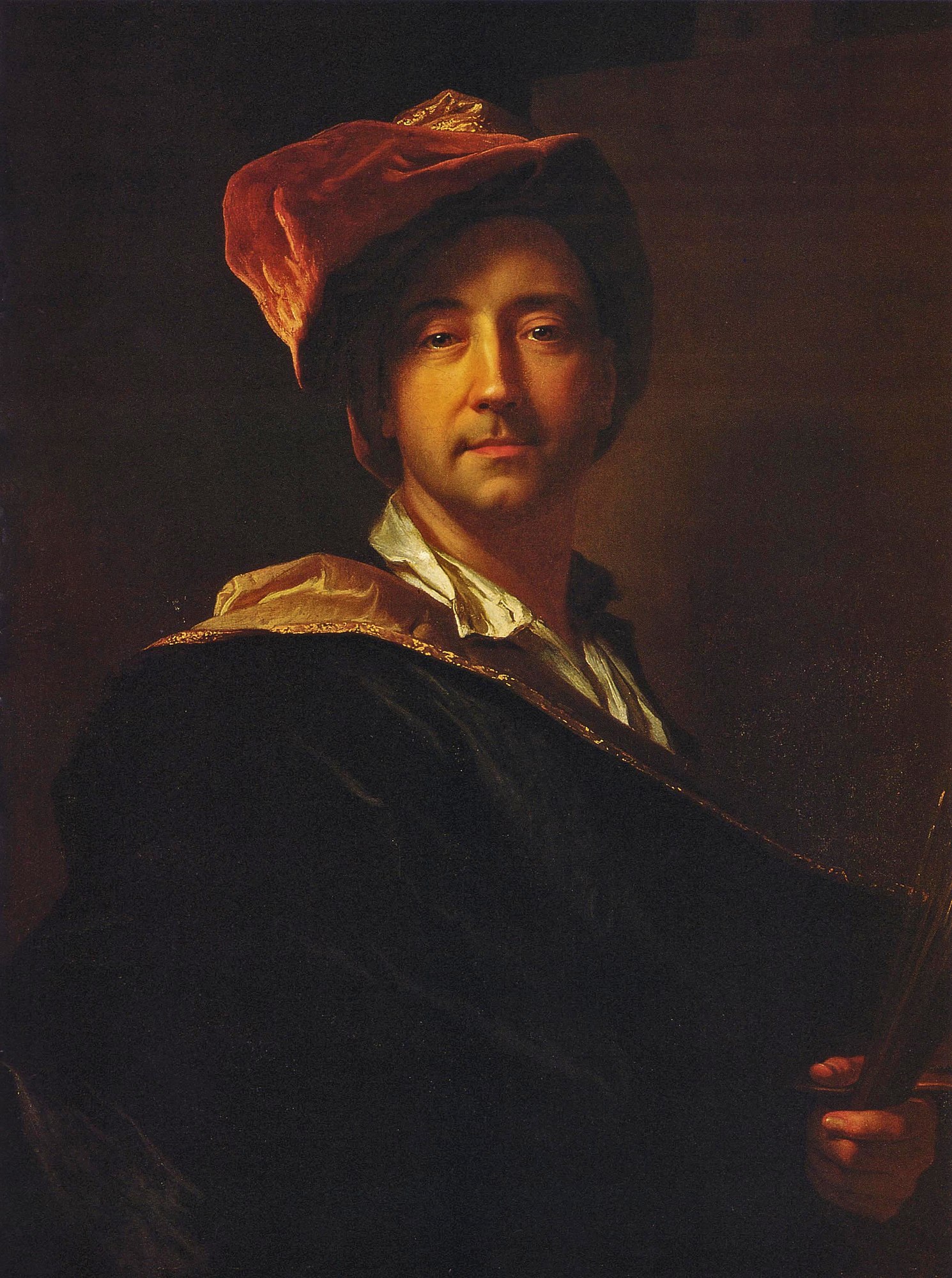
Hyacinthe Rigaud’s may have eventually become a painter to the stars, but his beginnings had little to do with painting.
Hyacinthe Rigaud started out as a tailor, no less, as tailoring was in his blood. Ol’ Pop Rigaud had been a tailor too, but had also been known as a painter, alongside many others of Hyacinthe’s family members. So, tailoring or painting had been the family profession and looks like Hyacinthe’s choice of the latter helped him bring honor to the family name. Way to live up to your noble ancestry, pal. Also, his early dabblings in dressmaking explain why he paid so much attention to couture in his portraits.
Upon choosing painting as a career, Rigaud trained in Montpellier and Lyon. But it was his move to Paris, and also his subsequent switch to portrait painting, which bought him fame and glory. While he’d been training in Lyon, Rigaud brushed up on his portrait painting talents with all those cloth merchants who wanted their pictures made; his close attention to fancy attire made him every aristocrat’s favorite painter. After all, if you’re gonna blow all those ducats on your couture, you might as well spend a little more and get someone who does justice to it in a painting. Kind of like selecting the right photographer for your spring line.
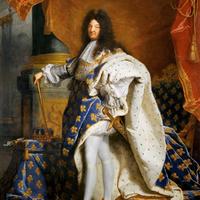
In fact, Rigaud had so many loaded peeps lining up to have their portraits made, that he had to hire a little extra help for his studio! Probably not the worst job in those days to be working as an assistant in the studio of the painter favored by the King. Speaking of whom, King Louis XIV and his coronation portrait from 1701 is Rigaud’s real claim to fame. He had some other stellar work too, including some religious subjects, but this one definitely set the standards for all kingly portraits to come.
Sources
Sources
- "Hyacinthe Rigaud," Wikipedia, The Free Encyclopedia, https://en.wikipedia.org/w/index.php?title=Hyacinthe_Rigaud&oldid=75648… (accessed February 28, 2017)
- “Hyacinthe Rigaud: Painter to the King (1659-1743)”, Chateau de Versailles, http://en.chateauversailles.fr/discover/history/hyacinthe-rigaud
Featured Content
Here is what Wikipedia says about Hyacinthe Rigaud
Jacint Rigau-Ros i Serra (
Catalan pronunciation: [ʒəˈsin riˈɣaw ˈrɔz i ˈsɛrə]; 18 July 1659 – 29 December 1743), known in French as Hyacinthe Rigaud (
pronounced [jasɛ̃t ʁiɡo]), was a French baroque painter most famous for his portraits of Louis XIV and other members of the French nobility.
Born in the province of Roussillon, Jacint Rigau, whose name was Frenchified to Hyacinthe Rigaud, is considered one of the most celebrated French portrait painters of the classical period. According to Jacques Thuillier, professor at the Collège de France: "Hyacinthe Rigaud was one of those French painters who, under the Ancien Régime, achieved the highest fame as portraitists. This admiration was deserved both for the abundance of his output and for its constant perfection."
Rigaud owes his fame to the loyalty of the Bourbon dynasty, whose likenesses he painted across four generations. He drew most of his clientele from the wealthiest circles, among the bourgeoisie, financiers, nobles, industrialists, and ministers. His body of work provides an almost complete gallery of portraits of the leaders of the Kingdom of France between 1680 and 1740. A smaller part of his production, however, consists of more modest sitters: relatives, friends, artists, or ordinary merchants.
Inseparable from his famous 1701 Portrait of Louis XIV in Coronation Robes, Rigaud associated with all the great ambassadors of his century and several European monarchs. The exact number of paintings by the artist remains disputed, since his catalogue is extensive, but specialists agree that he painted more than a thousand different sitters. To this must be added the large number of copies recorded in the artist's account book, which nonetheless does not mention several hundred other canvases discovered since its publication in 1919.
Grandson of gilder painters in Roussillon, trained in his father's tailoring workshop, Hyacinthe Rigaud honed his skills under Antoine Ranc in Montpellier starting in 1671, before moving to Lyon four years later. It was in these two cities that he became familiar with Flemish, Dutch, and Italian painting, that of Rubens, Van Dyck, Rembrandt, and Titian, whose works he later collected.
Arriving in Paris in 1681, he won the Prix de Rome in 1682, but did not make the trip to Rome, on the advice of Charles Le Brun. Admitted to the Académie royale de peinture et de sculpture in 1700, he rose through every rank of that institution until his resignation in 1735.
According to the French art writer Louis Hourticq: "In dying, Rigaud left behind a gallery of great figures with whom our imagination now populates the Hall of Mirrors; Rigaud is essential to the glory of Louis XIV, and he shares in the radiance of a reign whose majesty he captured." True "photographs", faces that Diderot called "letters of recommendation written in a language common to all men", Rigaud's works now populate the greatest museums in the world.
Check out the full Wikipedia article about Hyacinthe Rigaud