More about George Caleb Bingham
- All
- Info
- Shop
Works by George Caleb Bingham

Sr. Contributor
Defying all stereotypes, George Caleb Bingham traveled to the frontier and became an artist.
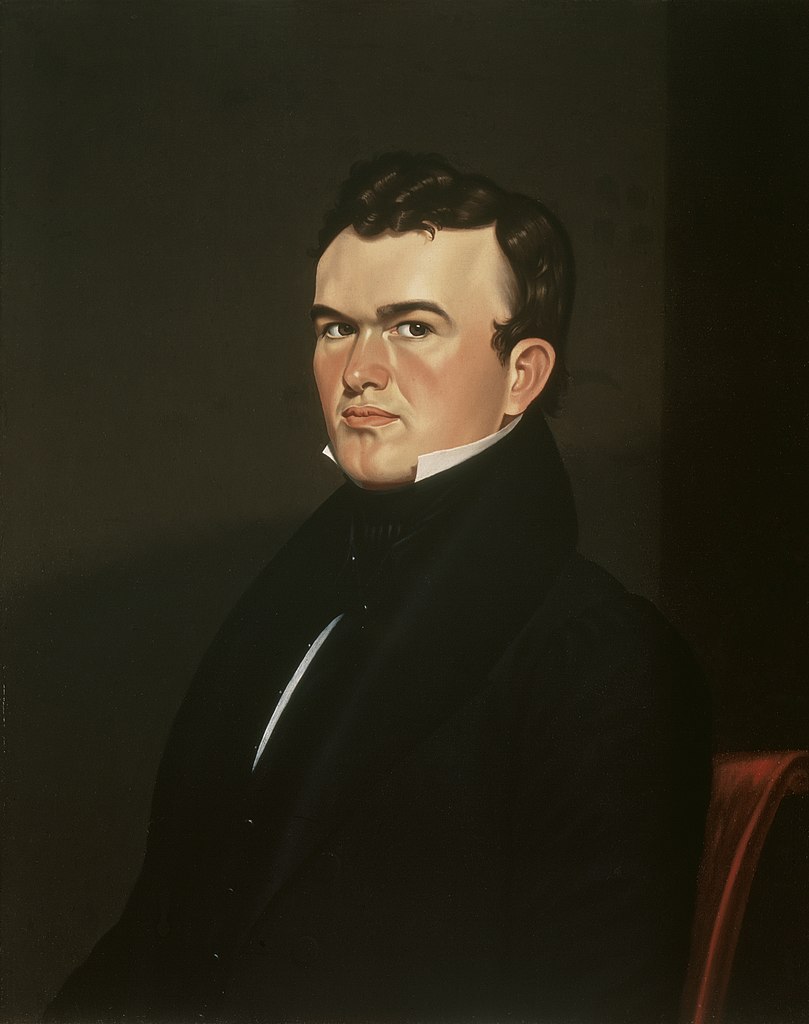
Someone had to document what life was like out there, and Bingham willingly took up the task. A brush with luck and fame may have inspired this ultimate career choice. When Bingham was just nine years old, he saw Chester Harding’s portrait of the infamous pioneer Daniel Boone in the temporary studio that the artist set up upon his arrival in Missouri. This early encounter likely inspired Bingham’s later foray into art and especially his interest in portraiture and scenes of people.
After working as a janitor at the girls’ school that his mother founded, Bingham left home to become a cabinet maker and delved into the arts. Not long after that, he started to paint family portraits, using drawing manuals and studying engravings of paintings to teach himself. Bingham was entirely self-taught, except for a three-month stint at the Pennsylvania Academy of the Fine Arts during a longer trip to see the art that was housed on the East coast. He studied the work of Benjamin West and Thomas Sully, which informed his paintings of frontier life and politics upon his return to Missouri. His hard work ultimately paid off. Just six years after starting to explore painting, Bingham was supporting himself through his artmaking. He then moved to St. Louis, where his career really took off.
Bingham is best known for his artworks that center on the peoples whose lives depended on the Missouri and Mississippi Rivers. These calm and idyllic scenes have since been recognized as constructed versions of the reality the images were based on. Bingham’s love for his native Missouri eventually morphed into a political career, driven by his belief that slavery was immoral. He wrote scathing letters to a Missouri newspaper radically opposing the expansion of slavery beyond its original borders and into the territories.
Bingham’s artistic and political legacy won him a place in the hearts of Missourians. In 1974, the St. Louis Mercantile Library tried to sell their treasure trove of drawings by George Caleb Bingham to pay for a new air conditioning system. Before they could put the collection up for sale, the current governor called upon the people of Missouri to help raise funds to keep the collection. Even though the local government probably could’ve found the money to maintain a municipal building and preserve aspects of their cultural heritage, students from all across the state started raising funds and eventually raised upwards of $25,000 for the cause. Under new legal restrictions that resulted from this extraordinary effort, the collection of drawings can now never be sold or separated. When the drawings appeared in a landmark exhibition at The Metropolitan Museum of Art in 2015, they bore a heartwarming credit line that read, “Lent by the People of Missouri.” I have a feeling that this is exactly what Bingham would’ve wanted.
Sources
Sources
- Encyclopedia Britannica. “George Caleb Bingham.” Visual Arts. https://www.britannica.com/biography/George-Caleb-Bingham. Accessed 30 June 2020.
- Keating, Deborah. “Bingham, George Caleb.” Civil War on the Western Border: The Missouri-Kansas Conflict, 1854–1865. The Kansas City Public Library. https://civilwaronthewesternborder.org/encyclopedia/bingham-george-caleb. Accessed 30 June 2020.
- Smith, Roberta. “Review: George Caleb Bingham’s Serene Images of Rivers and Frontier Life, at the Met.” Art & Design. The New York Times. https://www.nytimes.com/2015/06/19/arts/design/review-george-caleb-bing…
- St. Louis Art Museum. “Missouri children spearheaded 1970s campaign to save George Caleb Bingham drawings.” Blog, Exhibitions. 18 March 2015. https://www.slam.org/blog/missouri-children-spearheaded-1970s-campaign-…. Ac
- The State Historical Society of Missouri. “George Caleb Bingham.” Historic Missourians. https://historicmissourians.shsmo.org/historicmissourians/name/b/bingha…. Accessed 30 June 2020.

Featured Content
Here is what Wikipedia says about George Caleb Bingham
George Caleb Bingham (March 20, 1811 – July 7, 1879) is recognized as one of the most important American artists of the 19th century. Known in his lifetime as “the Missouri artist,” he is distinguished among the first generation of painters of the early American West for classic narrative scenes drawn from his observation and experience.
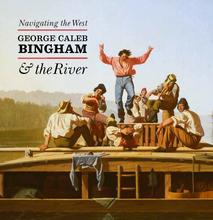
His most famous paintings chronicle America’s westward expansion and depict life along the Mississippi and Missouri rivers. Rendered in the style of “genre painting,” Bingham’s works capture the unique aspects of the American frontier with themes of community engagement, leisure, and river life before the steamboat era. His Fur Traders Descending the Missouri (1845, The Metropolitan Museum of Art, New York) is a renowned example of Bingham’s genre paintings, containing a colorful cast of characters and scenes imbued with layers of symbolism and socio-political commentary.
Today, Bingham’s paintings portraying fur trappers, riverboat men, fishermen, politicians and frontier settlers are considered national treasures and can be viewed as vivid historical records of the politics, commerce and social relations of everyday life of the American frontier. His paintings are held in important private and museum collections, notably: National Gallery of Art; National Portrait Gallery; Wadsworth Atheneum; Amon Carter Museum of American Art; Saint Louis Art Museum, the Nelson-Atkins Museum of Art; Los Angeles County Museum of Art; Fine Arts Museum of San Francisco, Brooklyn Museum; and The White House. He was also a prolific portrait artist, producing as many as 500 portraits depicting numerous pioneering Missourians, important politicians from the state, as well as famous figures such as John Quincy Adams, the sixth US president who served from 1825 to 1829, and Senator Daniel Webster.[1]
All of Bingham’s known paintings, including recently discovered works, are compiled in the George Caleb Bingham Catalogue Raisonné, a public-access electronic catalogue launched in 2018 that builds on the work of 20th century American art scholar E. Maurice Bloch (1916 -1989). In 1986 Bloch published The Paintings of George Caleb Bingham: A Catalogue Raisonné
Check out the full Wikipedia article about George Caleb Bingham