More about Nicholas Roerich
Works by Nicholas Roerich

Contributor
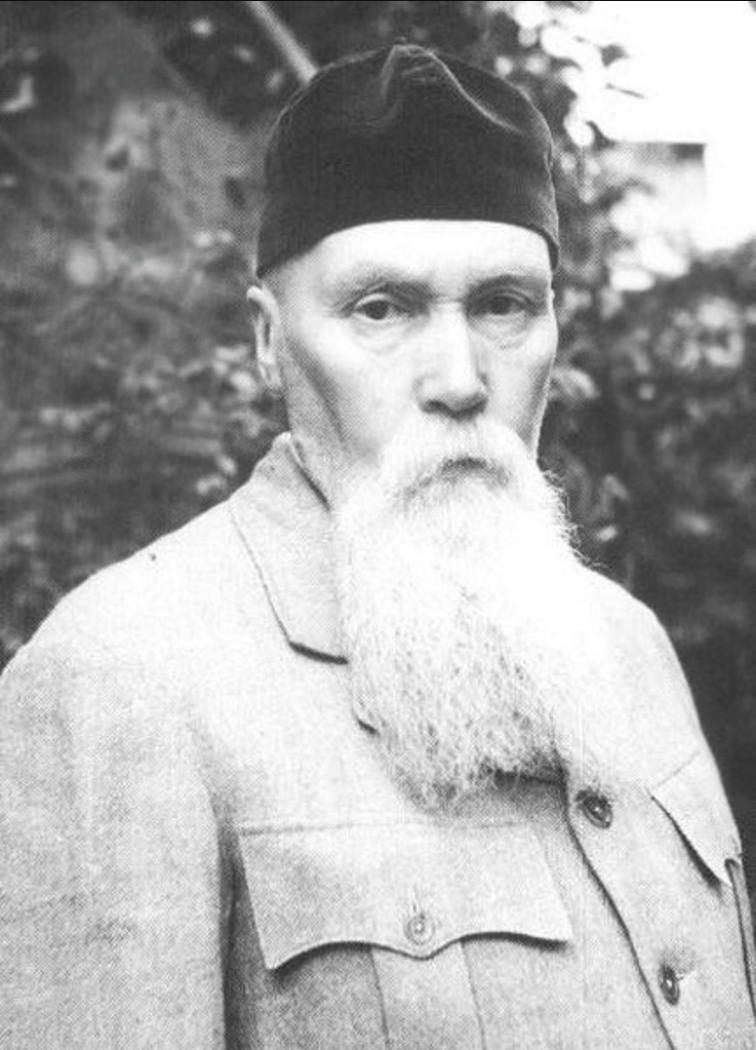
Nicholas Roerich was the self proclaimed art world bodyguard, creating the Roerich Pact aka The Treaty on the Protection of Artistic and Scientific Institutions and Historic Monuments.
He was also “an archaeologist, art historian, furniture designer, poet, peace activist, botanist, spiritual philosopher, mentor to Marc Chagall, political adviser, costume designer (for Sergei Diaghilev’s Ballets Russes and Rimsky-Korsakov’s operas), women’s rights advocate and founder of a yoga society with his wife, Helena, who herself was an author” and of course an artist. In other words, if Nicholas Roerich were to apply to college now, he would have just enough extracurricular activities to get into an average school.
Roerich was born in Saint Petersburg, Russia in 1874 to Konstantin and Maria Roerich. Konstantin was a lawyer and as such gave his children a good education and constant contact with the writers, scientists and artists of middle-class Russia. Young Nicholas showed a passionate interest and talent for art while very young but his father figuratively sh*t on his dreams. Nicholas was to be a lawyer like his father. But he only agreed to go to law school if he could simultaneously go to art school. So the great underachiever did both, earning his art degree in 1897 and his law degree in 1898.
As soon as he graduated he intended to go to Europe but instead met a special lady, Helena Shaposhnikov. He fell in love and still went to Europe but when he returned he got married. The two of them started a wild journey full of travel, occult mysticism and art. They began their lives together in Russia and then moved to Finland, London, and The United States (Chicago and New York). Throughout this entire time, the family had been planning to go to India, as they had become completely engrossed in Hinduism. After their time in the U.S., the Roerich’s with their two sons and five friends went on a five-year trip through Asia. Roerich himself said the expedition “started from Sikkim through Punjab, Kashmir, Ladakh, the Karakoram Mountains, Khotan, Kashgar, Qara Shar, Urumchi, Irtysh, the Altai Mountains, the Oyrot region of Mongolia, the Central Gobi, Kansu, Tsaidam, and Tibet.” We’ve never heard of most of these places but we can assume Roerick liked them because he never went back to Russia. He died in Naggar, India in 1947 with one of the coolest legacies of all time. One of his paintings was the most expensive sold at a Russian auction ever. He has a minor planet named after him. He was the inspiration for the H.P. Lovecraft novel, "At the Mountains of Madness." And last but (only just) not least, he was nominated for a Nobel Peace Prize three times for being the great art protector.
All in all, he was pretty cool.
Sources
Sources
- Besonen, Julie. "Visions Of A Forgotten Utopian." Nytimes.com. N.p., 2014. Web. 7 July 2017.
- "Nicholas Roerich Museum New York." Roerich.org. Web. 7 July 2017.

Featured Content
Here is what Wikipedia says about Nicholas Roerich
Nikolai Konstantinovich Rerikh (Russian: Николай Константинович Рерих), better known as Nicholas Roerich (/ˈrɛrɪk/; October 9, 1874 – December 13, 1947), was a Russian painter, writer, archaeologist, theosophist, philosopher, and public figure. He is best known for his prolific body of artwork, which spans over 7,000 paintings, and his contributions to a wide array of cultural, political, intellectual, and artistic movements and causes.
Born in Saint Petersburg to a Baltic German father and Russian mother, Roerich had a privileged upbringing that exposed him to many artists, intellectuals, and scientists. In his youth he displayed a natural curiosity and aptitude for various activities and subjects ranging from drawing to botany. Trained as an artist and lawyer, his main interests were literature, philosophy, archaeology, spiritual practice, and esotericism. An avid music enthusiast, he also found success in set design, most notably for Sergei Diaghilev's Ballets Russes and for the 1913 premiere of Igor Stravinsky’s early Modernist ballet The Rite of Spring.
Roerich was deeply influenced by Russian Symbolism—which promoted mysticism, free expression, and the transformative power of art—and Russian Cosmism, which sought to integrate science, religion, and metaphysics into a unified worldview. Drawing inspiration from prehistoric, Russian, Central Asian, and Eastern civilizations, his paintings focus on grand natural landscapes—particularly the Himalayas—symbolic imagery, and mythical and religious themes. Roerich's artwork has been noted for its ethereal and transcendental qualities, which reflect his belief that art could serve as a vehicle for spirituality, personal transformation, and global harmony.
Roerich lived in various places until his death in Naggar, India. He organized and participated in expeditions across Central and East Asia and founded more than a dozen cultural and educational institutions and societies worldwide. Motivated by the idea of "Peace through Culture", Roerich advocated for the universal preservation of art and architecture; he launched and led the Banner of Peace movement that culminated in the so-called Roerich Pact for the protection of cultural objects, which was ratified by the United States and most other nations of the Pan-American Union in April 1935. For these efforts he was nominated several times for the Nobel Peace Prize.
With his wife Helena (née Shaposhnikova), Roerich established the neo-theosophical doctrine of Agni Yoga, which combines elements of Western and Eastern thought, religion, and philosophy. Also known as "the Living Ethics", this body of teachings—along with Roerich's spiritual and philosophical works and ideas—forms the basis of a spiritual, cultural and social movement known as Roerichism.
Check out the full Wikipedia article about Nicholas Roerich